 You've just landed on ancient Polynesian shores. Hear that? It's the sound of trade winds carrying the spray of the ocean through the canopies of the coconut trees. But what's that boom-da-boom-BOOM coming from the distance? It seems you've arrived just in time to commemorate a birth in the royal family!
Wednesday, October 5, 2011
Aloha!
Plop!
You've just landed on ancient Polynesian shores. Hear that? It's the sound of trade winds carrying the spray of the ocean through the canopies of the coconut trees. But what's that boom-da-boom-BOOM coming from the distance? It seems you've arrived just in time to commemorate a birth in the royal family!
You've just landed on ancient Polynesian shores. Hear that? It's the sound of trade winds carrying the spray of the ocean through the canopies of the coconut trees. But what's that boom-da-boom-BOOM coming from the distance? It seems you've arrived just in time to commemorate a birth in the royal family!
Tuesday, October 4, 2011
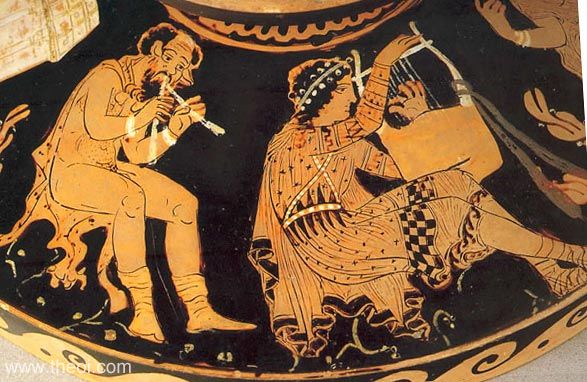
Greek Please!

Monday, October 3, 2011
Ta'ziyeh
Islam: the religious faith of Muslims, based on the words and religious system founded by the prophet Muhammad and taught by the Koran, the basic principle of which is absolute submission to a unique and personal god, Allah.
Drama: a composition in prose or verse presenting in dialogue or pantomime a story involving conflict or contrast of character, especially one intended to be acted on the stage; a play.
When I think of Islam, the last thing I would associate it with is drama. However, Shakespeare called all the world a stage. Therefore, drama is history. History is drama. Life is drama. "And the life of this world is nothing but play and amusement. . ." (Al-An am 6:32)
As oral knowledge developed in the Middle East, drama became a means by which Muslims could commemorate one of the greatest martyrs during Umayyad Dynasty. What began as a way to preserve the history of one single war has now become the great "Islamic Drama." It is ritualistic. It is powerful. It is Ta'ziyeh.
Drama: a composition in prose or verse presenting in dialogue or pantomime a story involving conflict or contrast of character, especially one intended to be acted on the stage; a play.
When I think of Islam, the last thing I would associate it with is drama. However, Shakespeare called all the world a stage. Therefore, drama is history. History is drama. Life is drama. "And the life of this world is nothing but play and amusement. . ." (Al-An am 6:32)
As oral knowledge developed in the Middle East, drama became a means by which Muslims could commemorate one of the greatest martyrs during Umayyad Dynasty. What began as a way to preserve the history of one single war has now become the great "Islamic Drama." It is ritualistic. It is powerful. It is Ta'ziyeh.
Friday, September 30, 2011

Wednesday, September 28, 2011
Ancestral Voices Prophesying War!
Language and Oral Tradition: Music and Dance of the Kanak
Wade Davis, Explorer for National Geographic, stated: "a language is not just a body of vocabulary or a set of grammatical rules: a language is a flash of the human spirit, it's the vehicle through which the soul of each particular culture comes into the material world." Nowhere is the soul of a particular culture more manifest than through the music and dance of that culture.
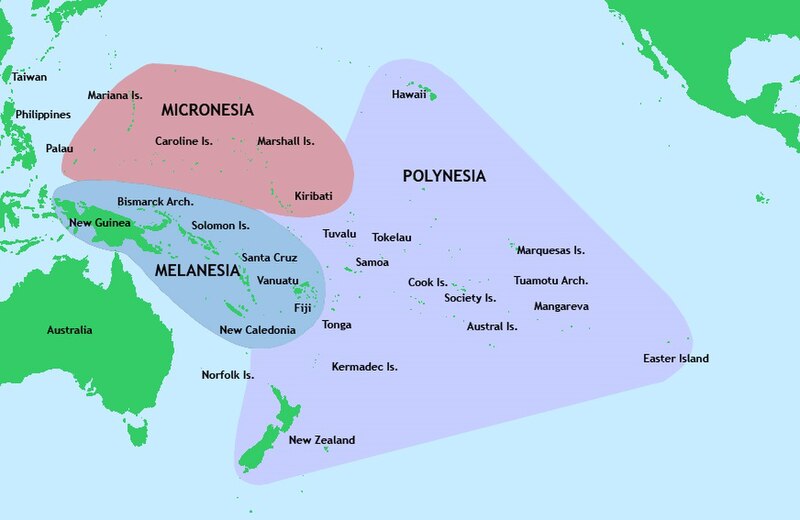 |
| New Calednoia is the Home of the Kanak Peoples |
Tuesday, September 27, 2011
A-Muse Me with Music!
 Between 1600 and 1100 B.C. the Mycenaean culture was a dominant force in the Mediterranean. Centered on the northeastern side of the Peloponnese peninsula, they were a warrior favoring people who conquered many neighboring cultures in their expansion. There are not many direct records from their culture, however more famous texts such as Theogony by Hesiod, the Iliad and the Odyssey tell part of their story. In particular Hesiod tells the story of Greek Mythology, frequently referencing the Muses who aid in his story telling.
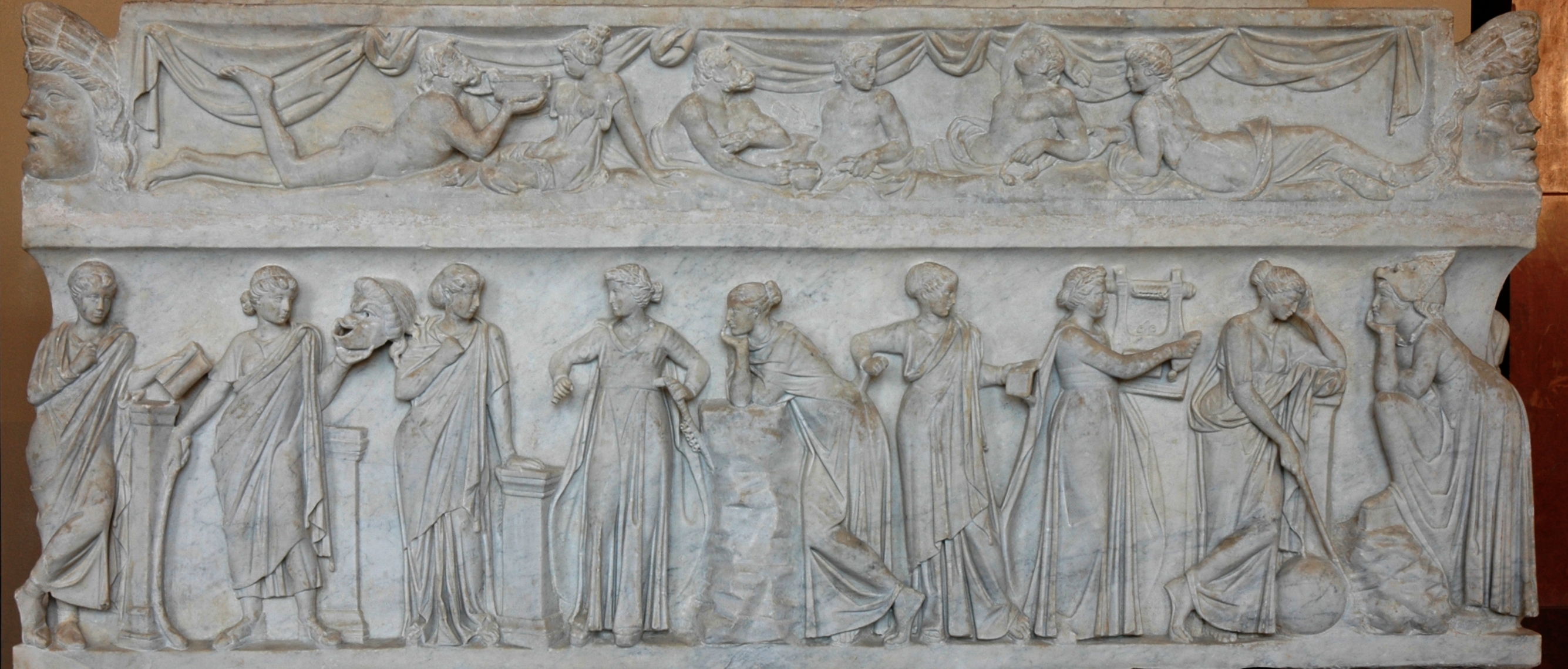 |
| A Muse sarcophagus with the nine Muses depicted |
Music was such an integral part of Greek life that it played into nearly every important event. According to John G. Landels, music was engrained into events such as public gatherings, private dinner parties, ceremonies, worship, comedies, tragedies, sports and athletic events, at schools, on the battlefield and on the ships (see page 1 in "Music in Ancient Greece and Rome", Routledge 1999.) It would be easy in today's world of music how this is possible and the effects that it has at bringing forward emotions within the people. To illustrate that, the 100,000 Watt sound system at the football stadium can easily sway the cheery fans to start stomping and yelling for their team with a couple of favorite songs.
 |
| Muses dancing with Apollos |
Monday, September 26, 2011
Lost in translation
I'd like to respond to Kacee's post about Arab language and music and Samuel's comment on it.
I think that meaning is definitely lost in translation. Going further than that, I believe that meaning can be re-gained when we reverse the translation. I'll give some examples I learned about in my Book of Mormon class with Sherrie Mills Johnson:
 |
| Source. |
I think that meaning is definitely lost in translation. Going further than that, I believe that meaning can be re-gained when we reverse the translation. I'll give some examples I learned about in my Book of Mormon class with Sherrie Mills Johnson:
- Hope and tikvaw. The Hebrew word for hope is tikvaw, which means cord. How are hope and cord related? What added insight do we receive from this translation? When we hope in or for something, we tie (as with a cord) ourselves and our expectations to it.
- Atonement and kaw-far'. The Hebrew word for atonement is kaw-far'. One of its meanings is to cover. How are atonement and cover related? Or what do we learn from this translation? I am covered by Christ's Atonement from the effects of sin.
- Atonement and katallage. The Greek word for atonement, katallage, means exchange. How are exchange and atonement related? Or what meaning to we gain from knowing this translation? In the Gospel, we exchange our wills for Christs. We exchange our sins for His forgiveness. We exchange our imperfections for His perfections.
All these translations give deeper meaning to these (already meaningful!) words, which would otherwise be "lost in translation."
Subscribe to:
Posts (Atom)