
Monday, November 14, 2011
Translating part II
So, after my previous adventure, the second half of translating was not nearly as exciting, but we got done what we needed to.

See No Evil
 "Censorship has followed the free expressions of men and women like a shadow throughout history." Mette Neweth
I recently came across the following video:
Given Jimmy Kimmel's compilation of unnecessarily censored videos clips and Catherine's post on newspapers, I've been thinking a lot about censorship lately and wanted to learn more about the subject.
Friday, November 11, 2011
Newspapers
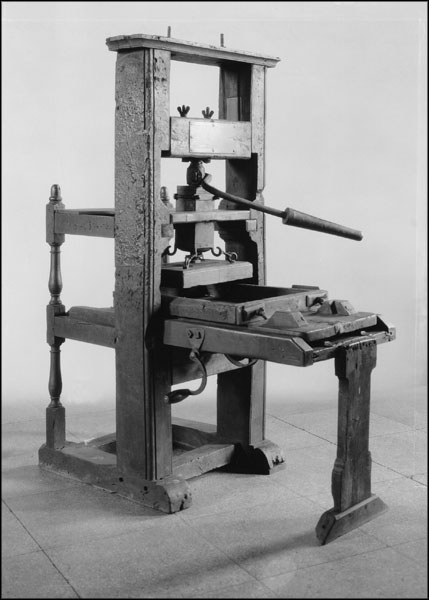
When I was 8 years old, my mom took my siblings and I on a trip around the border of the united states. We stopped in a lot of states and saw a lot of interesting things. I remember visiting a print shop that produced newspapers and being in awe of the huge machinery. Later, when I was in fourth grade, I had the opportunity to stay the night at Sutter's Mill for a field trip. One of the activities we were able to participate in while we were there was assembling our own newspaper. Well, only partially. I was able to assemble the type for my own name for trip, "Clara Greenly" and pick one out of a list of predetermined headlines to have my name inserted into. Probably the most informative part of the experience was watching how the machinery was operated and the ink applied. I still have that newspaper in a drawer somewhere back home.
Thursday, November 10, 2011
Adventures in the Life of Catherine Hawkley
Over the past two days I've kinda felt like a drug dealer. I arranged drop off meetings, one of which occurred in a deserted lobby, and transported goods from one place to another. These "goods" were actually and a page of translation we needed to create our tablet, so theses meetings were all completely legal, the setup just made me laugh.
She can sing. She can dance. But she can't do calligraphy.
I'm a girl. As a girl I feel like there are a few chief components to life that I should be the master of. Handwriting is one of those things. Calligraphy? Of course I should be able to handle it. WRONG! Such was the discovery I made tonight whilst working on the Rosetta project with my civilization group.
First and foremost, I now have a deep and abiding respect for anyone who can successfully manage a calligraphy pen. Those things are difficult! As such, it was my responsibility to acquire the calligraphy pen with which we were to write our message. Perhaps I didn't buy the highest quality pen (college budget... hehe), but still it was a good pen. Despite my most valiant efforts though, I could not make that pen work for me. On our practice page, I managed to convince the pen to write one word: "Mom." Thanks Mom!
In our group, the process of creating our "artefact" happened like so:
- We met at the library with supplies in hand.
- We journey through the library to find a suitable place to work
- We select parallel verses from the Qur'an and Bible about Joseph in Egypt to compare and contrast the two works.
- We each take turns writing the Hebrew/Arabic calligraphy in pencil on our medium. Hebrew on one side, Arabic on the other.
- We each take turns tracing the pencil with the calligraphy pen (except for me who couldn't get the pen to work).
- We examine our work.
- We celebrate!
Wednesday, November 9, 2011
Questions to answer about fonts and typefaces during the print unit
I'd like to use this post (don't forget about my other one!) to jot some ideas down about what I'd like to get out of and questions I'd like to answer during the print unit. Please feel free to bring up any issues I might be missing, suggest subjects to research, and give me your feedback!
Why fonts and typefaces? Design really interests me. I think I have a good eye for design, and I actually enjoy designing things myself. I've learned that well-used fonts and typefaces are an integral part of good design.
Why were different fonts and typefaces created?
What's the difference between fonts and typefaces?
How were different fonts and typefaces used? (Were they used like we use them today--emphasis, readability, etc.?)
Who designed fonts and typefaces? Were they artists? Printers? Both?
How did various fonts and typefaces get used in religious texts?
Did any scientific research go into fonts and typefaces? Researching readability, perhaps?
I think I'll start my research simply--with Wikipedia. Then onto its references and "external links".
This website also seems to have a pretty good list of published sources.
Why fonts and typefaces? Design really interests me. I think I have a good eye for design, and I actually enjoy designing things myself. I've learned that well-used fonts and typefaces are an integral part of good design.
 |
| I think these are pretty fonts, especially together. |
What's the difference between fonts and typefaces?
How were different fonts and typefaces used? (Were they used like we use them today--emphasis, readability, etc.?)
Who designed fonts and typefaces? Were they artists? Printers? Both?
How did various fonts and typefaces get used in religious texts?
Did any scientific research go into fonts and typefaces? Researching readability, perhaps?
I think I'll start my research simply--with Wikipedia. Then onto its references and "external links".
This website also seems to have a pretty good list of published sources.
Illiterate for a day
About a week and a half ago, Group 4 got together to try our hands at calligraphy. Here's how it turned out!
Subscribe to:
Posts (Atom)