Different
forms of media have existed for each generation of Americans today just as for
any civilization in history. Some forms of knowledge are more suited to the
nation’s size and structure than others in keeping the peace, establishing law
and general management. Although multiple forms of media for knowledge exist in
a society, the dominant media of that people affects the size and control of
governmental power.
"As the biggest library if it is in disorder is not as useful as a small but well-arranged one, so you may accumulate a vast amount of knowledge but it will be of far less value to you than a much smaller amount if you have not thought it over for yourself. " Arthur Schopenhauer (1788-1860) German philosopher
Showing posts with label oral knowledge. Show all posts
Wednesday, December 14, 2011
Sunday, November 27, 2011
Literature that Relfects Society
Do you remember library day in elementary school? -- That half hour or 45 minutes set aside each week where you traverse the halls in a single file line with your class as you journey to the library in search of a new book? From third grade up, my personal book selections consisted of chapter books. Yours probably did too. But think back to the time before novels. Think back to the time when going to the library meant finding a new picture book. Think back to the time when Curious George, Green Eggs and Ham, and Alexander and the Horrible, Terrible, No Good, Very Bad Day meant more to you than any other reading you did. For me, this was the time when the printed word meant the most to me. This was when reading was exciting!
The history of children's literature greatly reflects and has been profoundly influenced by the history of the printing press. Spanning folk, oral, written, and print knowledge, children's literature is an ever-changing genre that manifests cultural perceptions of childhood.
Sunday, October 30, 2011
Q & A with Dr. Toronto: A discussion on Written Knowledge
This past week I was able to interview Dr. James A. Toronto about the significance of written knowledge in the Middle East. Dr. Toronto has a Ph.D from Harvard in Islamic Studies and currently teaches at BYU.
Labels:
Cultural Diversity,
Islam,
Kacee Hill,
oral knowledge,
written knowledge
Friday, October 14, 2011
From oral to written knowledge and back again
So poems are one of those odd forms of expression that move
through both oral and written knowledge.
Most poems today are written down, but the structure of poetry is made
up by rhythm, alliteration, meter, breaks, etc.—all of which are only perceived
through sound and oral expression. This
is why one of my English teachers told me that poetry is meant to be read
aloud, and why there are poetry reciting competitions such as Poetry Out Loud
(I had the opportunity to participate in this in high school).
Labels:
Assyria,
Catherine Hawkley,
Drama,
oral knowledge,
poetry,
written knowledge
Thursday, October 13, 2011
Memory Booster!
Thanks for the Post Holland. I got to wondering how I could improve my memory capabilities (for the next time this type of project rolls around, haha). I found the neatest video on how the brain can more easily make connections. Plus the domino scene at the end is sweet!
I was thinking that this provides great reason for why stories are so useful when it comes to oral knowledge. Enjoy!
Tuesday, October 11, 2011
Where spoken and written meet
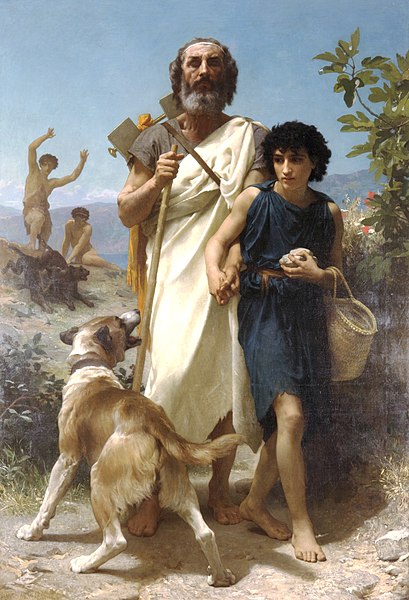
| Homer - A Man or Myth? |
Sunday, October 9, 2011
Islam, Oral Knowledge, and Thoughts in Between
As we conclude our unit on Oral Knowledge, I would like to discuss the discoveries I have made so far by examining what I have learned about Islamic Culture, particuarly with reference to the Umayyad Dynasty. By touching on the significance of music and drama in Islamic culture, I have come realize that art is essential to keeping a culture alive. If utilized, music and drama will enhance a culture's history, by providing a way to preserve it, as evidenced by the traditional performance of Ta'ziyeh. Not only that, but the language and important texts will better be remembered as shown through Cairo's use of song to teach the Qu'ran during the time of the Umayyads.
The tradition of performing arts help maintain history. Because of the story-telling and ritualistic side of drama and music, a civilization like the Islam can retain knowledge of its forefathes, who had no written form of communication, through performance. However, if a civilization that depends heavily on oral knowledge does not strive to preserve its performing arts, a very vital aspect of and potentially the entire culture could be lost, thus unveiling oral knowledge's greatest flaw.
UPDATE FOR OUR PROFESSORS: I would have done an interview-based post during this unit; however, the professor I was going to interview has been ill and thus unable to meet with me. I hope to hold that interview soon though and post about it ASAP. Now, unto today's post!
![]() |
| Carving of Arabian Musicians |
As we conclude our unit on Oral Knowledge, I would like to discuss the discoveries I have made so far by examining what I have learned about Islamic Culture, particuarly with reference to the Umayyad Dynasty. By touching on the significance of music and drama in Islamic culture, I have come realize that art is essential to keeping a culture alive. If utilized, music and drama will enhance a culture's history, by providing a way to preserve it, as evidenced by the traditional performance of Ta'ziyeh. Not only that, but the language and important texts will better be remembered as shown through Cairo's use of song to teach the Qu'ran during the time of the Umayyads.
The tradition of performing arts help maintain history. Because of the story-telling and ritualistic side of drama and music, a civilization like the Islam can retain knowledge of its forefathes, who had no written form of communication, through performance. However, if a civilization that depends heavily on oral knowledge does not strive to preserve its performing arts, a very vital aspect of and potentially the entire culture could be lost, thus unveiling oral knowledge's greatest flaw.
Labels:
Dance,
Drama,
Islam,
Kacee Hill,
Music,
oral knowledge
Friday, October 7, 2011
A little more about Assyria
Well, I interviewed Dr. Paul Hoskisson on Monday and quickly
arrived at the conclusion that a lot of the information in my last post is
just someone’s interpretation of the original texts. Brother Hoskisson stated “you
can’t read into texts from different places.
Assyria is different.” Some of my sources strayed from the knowledge
contained in the original texts and gather information from other societies. For example, the original texts do not specifically say that musicians were spared (although one refers to women being kept to become singers), that was just one scholar's interpretation. (Sorry Samuel)
Labels:
Assyria,
Catherine Hawkley,
Drama,
Music,
oral knowledge
Tuesday, October 4, 2011
Greek Please!
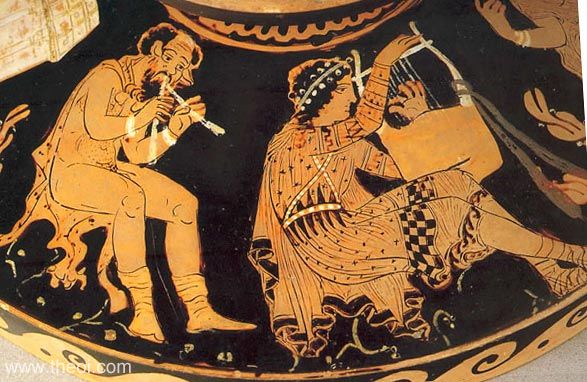
In my last post I gave a glimpse into Mycenaean music culture. Adding more to that, yesterday I had the opportunity to talk with Dr. Luke Howard from the School of Music about ancient Greek Music. After I was referred to him from my roommate who is taking his Music History class, I caught up with him and he was obliged to answer a few of my questions.
From his college web page, Dr. Howard specializes in the culmination and influence of classical music in the pop culture as well as music history in general. He enjoys relating the ancient to the modern and looking for those traditions passed down from each respective culture. Here are a few of his responses:
Monday, October 3, 2011
Ta'ziyeh
Islam: the religious faith of Muslims, based on the words and religious system founded by the prophet Muhammad and taught by the Koran, the basic principle of which is absolute submission to a unique and personal god, Allah.
Drama: a composition in prose or verse presenting in dialogue or pantomime a story involving conflict or contrast of character, especially one intended to be acted on the stage; a play.
When I think of Islam, the last thing I would associate it with is drama. However, Shakespeare called all the world a stage. Therefore, drama is history. History is drama. Life is drama. "And the life of this world is nothing but play and amusement. . ." (Al-An am 6:32)
As oral knowledge developed in the Middle East, drama became a means by which Muslims could commemorate one of the greatest martyrs during Umayyad Dynasty. What began as a way to preserve the history of one single war has now become the great "Islamic Drama." It is ritualistic. It is powerful. It is Ta'ziyeh.
Drama: a composition in prose or verse presenting in dialogue or pantomime a story involving conflict or contrast of character, especially one intended to be acted on the stage; a play.
When I think of Islam, the last thing I would associate it with is drama. However, Shakespeare called all the world a stage. Therefore, drama is history. History is drama. Life is drama. "And the life of this world is nothing but play and amusement. . ." (Al-An am 6:32)
As oral knowledge developed in the Middle East, drama became a means by which Muslims could commemorate one of the greatest martyrs during Umayyad Dynasty. What began as a way to preserve the history of one single war has now become the great "Islamic Drama." It is ritualistic. It is powerful. It is Ta'ziyeh.
Friday, September 30, 2011
Wait...what's Assyria?
Labels:
Assyria,
Catherine Hawkley,
Music,
oral knowledge,
War
Wednesday, September 28, 2011
Ancestral Voices Prophesying War!
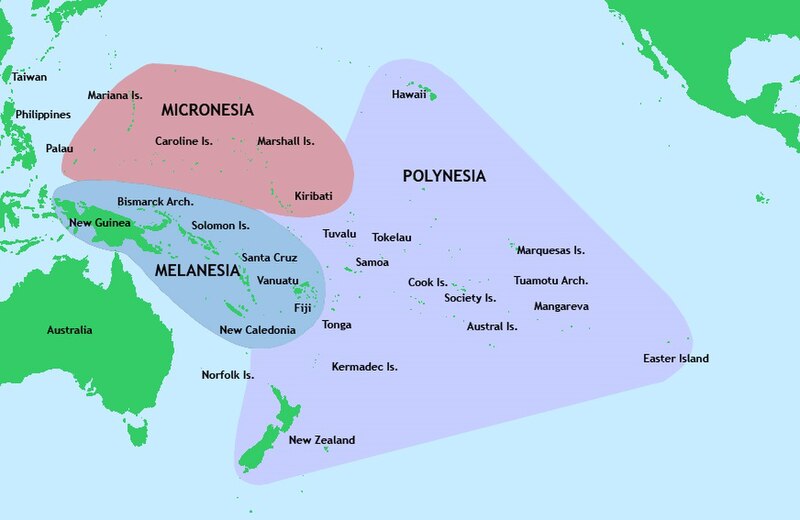
Language and Oral Tradition: Music and Dance of the Kanak
Wade Davis, Explorer for National Geographic, stated: "a language is not just a body of vocabulary or a set of grammatical rules: a language is a flash of the human spirit, it's the vehicle through which the soul of each particular culture comes into the material world." Nowhere is the soul of a particular culture more manifest than through the music and dance of that culture.
| New Calednoia is the Home of the Kanak Peoples |
Monday, September 26, 2011
Language and Music
"One aspect of unity in Arab music is the intimate connection between the music and the Arabic language."
A time of extensive expansion, the Umayyad Dynasty laid the foundation for the process by which modern classic Arab music has formed. As Umayyads sought to increase the incredible size of the already massive Islamic Empire, a fusion of cultures and ethnicities began that included both poetry, language, and song. It was during this time that Muslims started to gain an appreciation for music, an appreciation which to this day continuously shapes and reshapes the world's perception of Muslim music.
![]() |
| The boundaries of the Islamic Empire during the height of the Umayyad Dynasty |
Subscribe to:
Posts (Atom)